
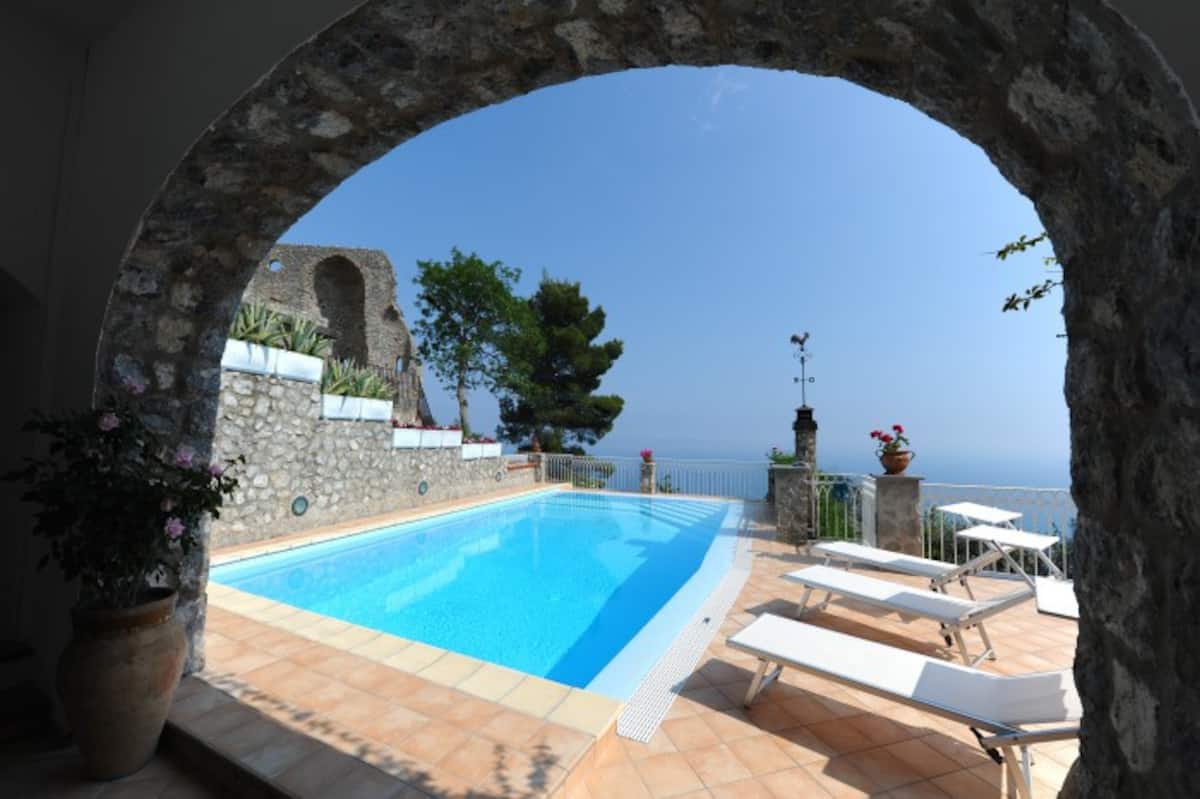

Villa Eustachio…our home for two glorious weeks
Villa Eustachio is situated in a village called Scala, not far from the centre of Ravello (about 2 Km).
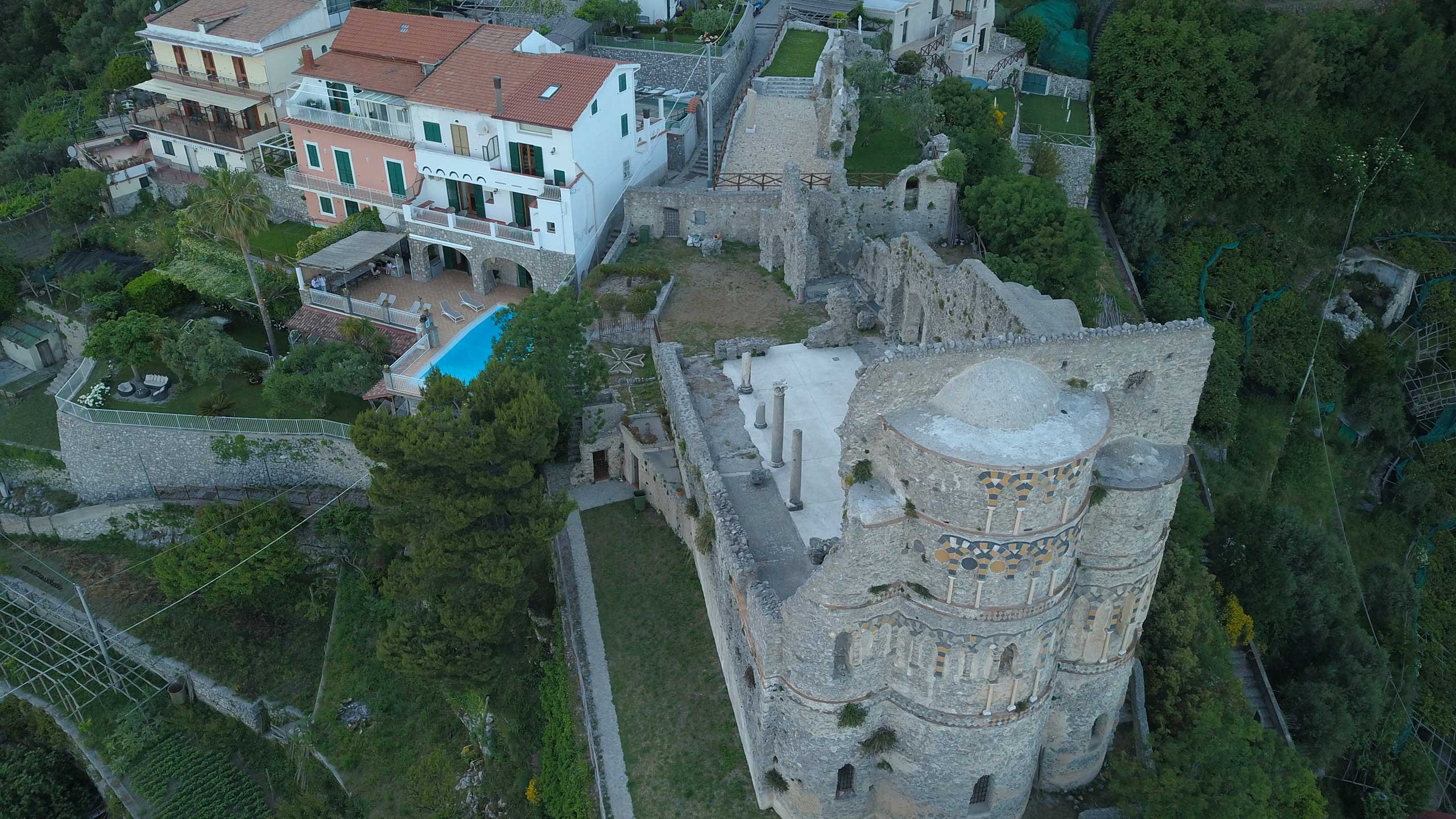
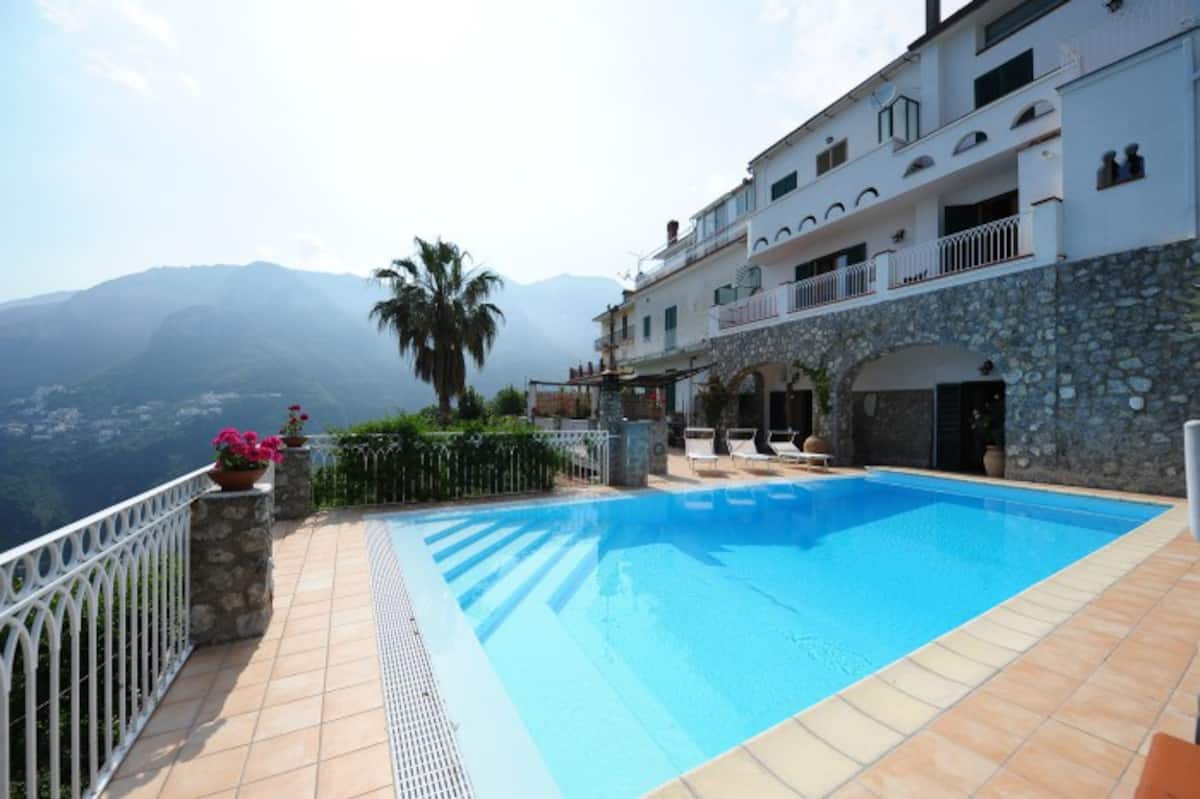
The villa has a central area, as well as two other depandance. There is a swimming pool of 4.5 meters by 9.50 meters which is for our exclusive use.
The house has been recently restored, and on the ground floor there is the large terrace and the swimming pool. From the terrace you enter the house into a large living room with separate open kitchen which has a washing machine and dishwasher.
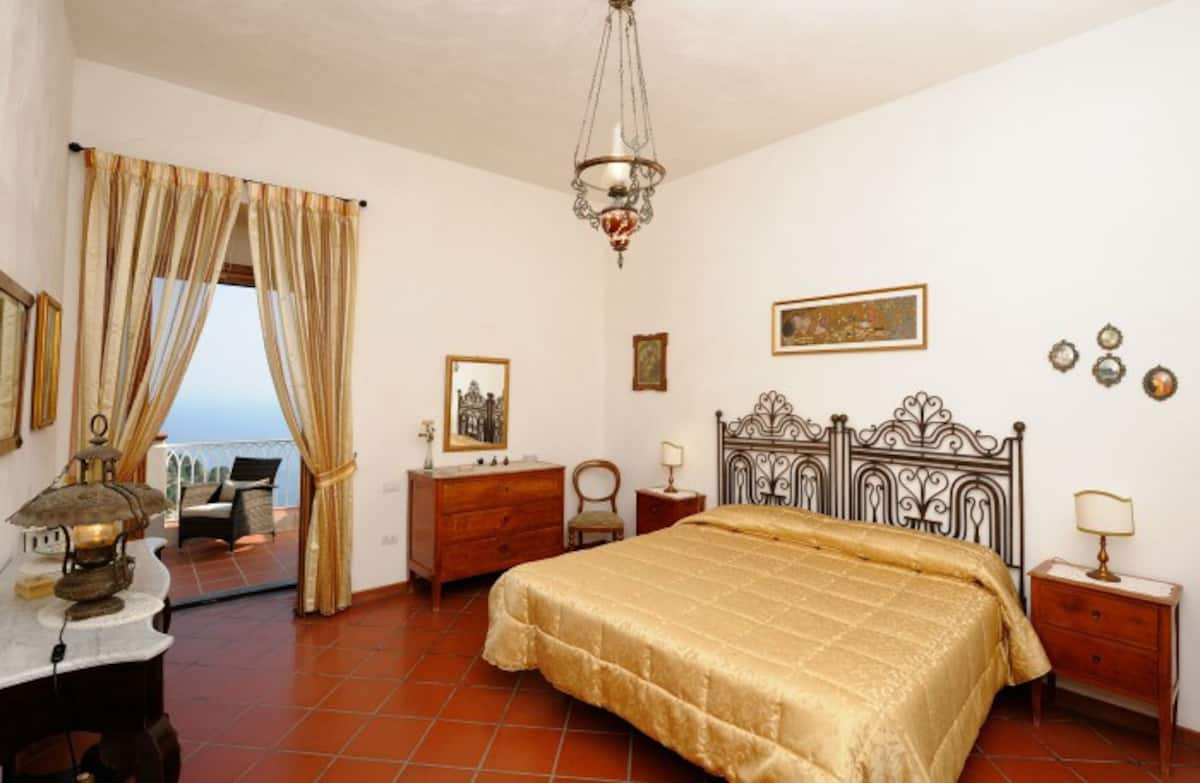
On the first level there are three bedrooms (one twin bedroom with mountain view and the ensuite bathroom ,one room with 1 double bed and 1 single bed with sea view and the ensuite bathroom, and one double bed room with the sea view and the ensuite bathroom). All the bedrooms have the air conditioning. There are also two more smaller apartments within the same building: First, the apartment named La Rondine can accommodate 5 people and is situated on the ground floor with a living room with double fold out sofa bed, and a balcony with sea view, bath,n the first floor there is a double bedroom and one single bedroom under a sloping ceiling, and a bathroom. Second, the apartment named Garden can accommodate 2+2 people and is composed of a living room (where is a sofa bed), a bathroom with shower, and a bedroom.
FUN FACTS
– 1500 steps from villa down to Amalfi Beach, which takes approximately an hour. So plenty of exercise to burn off the pasta calories.
– 30 minute walk to Ravello
– 25 minute bus ride from Scala down to Amalfi Beach.
About Scala
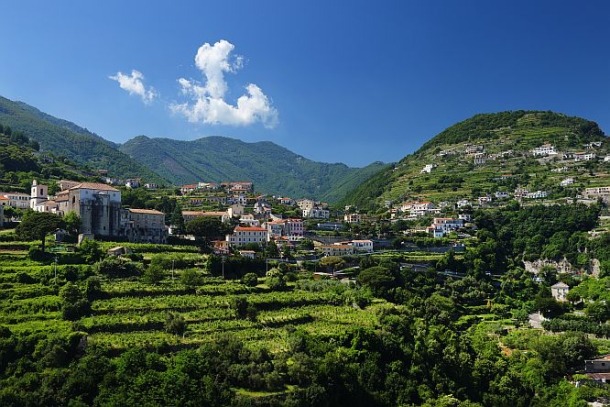
Scala is the oldest village on the Amalfi coast, dating back to the IV century, created by Roman citizens shipwrecked while sailing to Constantinople. Scala has a long and fascinating history linked to the Republic of Amalfi. If you happen to go hiking in the surrounding mountains, you can still see the medieval walls used once to protect Scala and Amalfi, further downstream towards the sea.
The city develops in a jagged way along the mountain and is subdivided into numerous hamlets, or hamlets, including Scala Centro, Minuta, Pontone, Campidoglio, San Pietro and Santa Caterina.
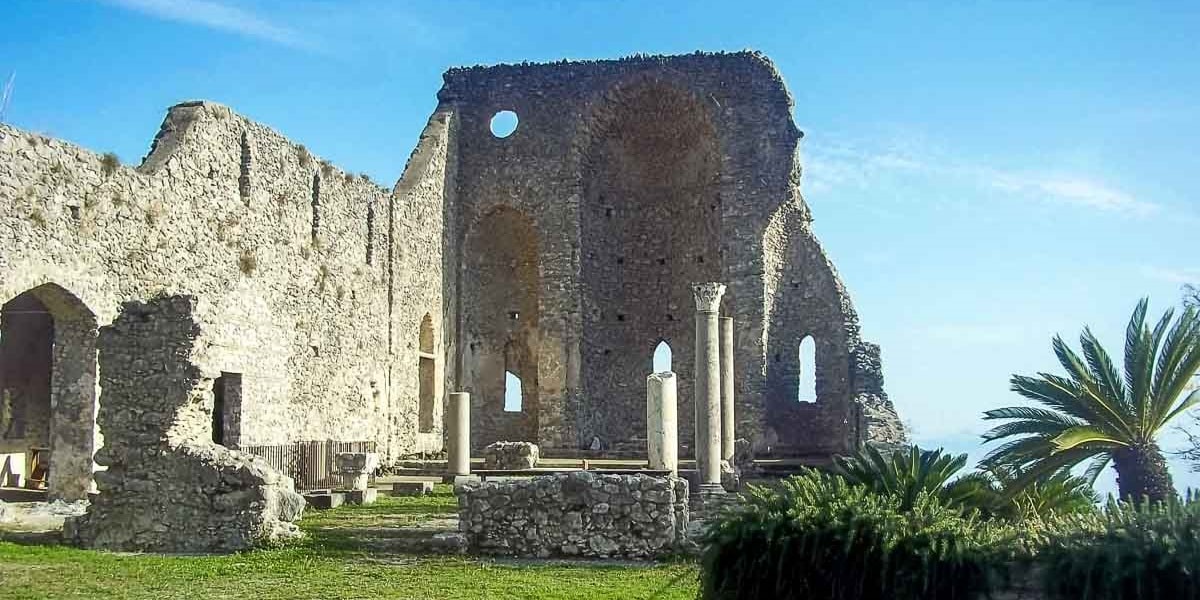
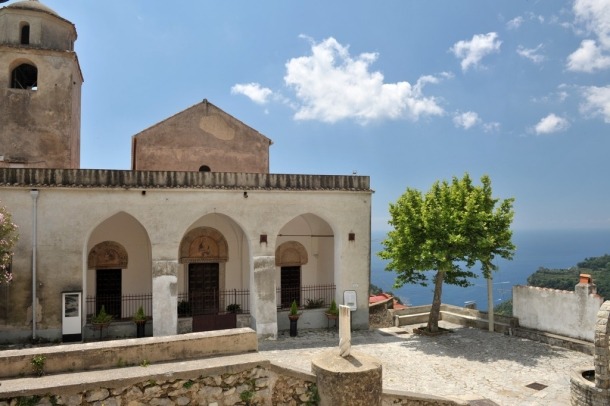
Each small village is characterized by its unique atmosphere and is developed around a church. is a very deeply spiritual village, as witnessed by the several churches, that at one time were more than one hundred, such as the Dome, located in the central square, the church and belltower of S. Giovanni Battista a Campidoglio, and the ruined Basilica of Sant’Eustachio (which is right next door to our villa.
Remarkable Ruins of the Basilica of Sant’Eustachio
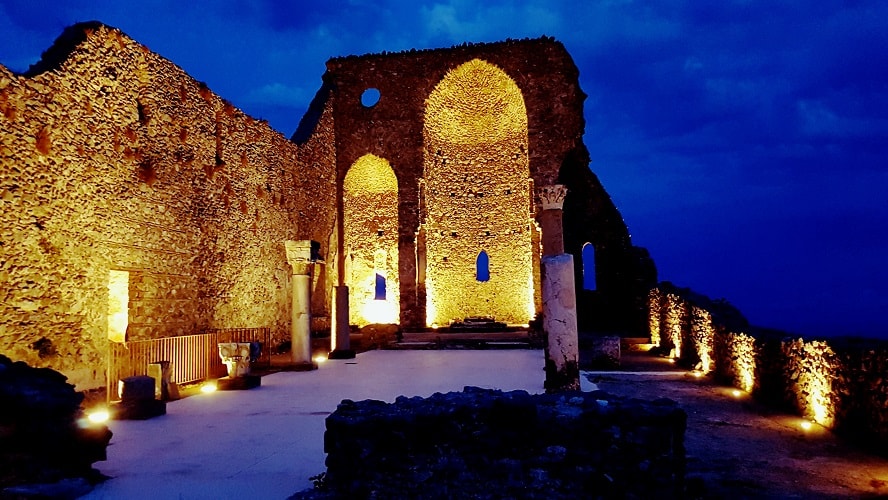
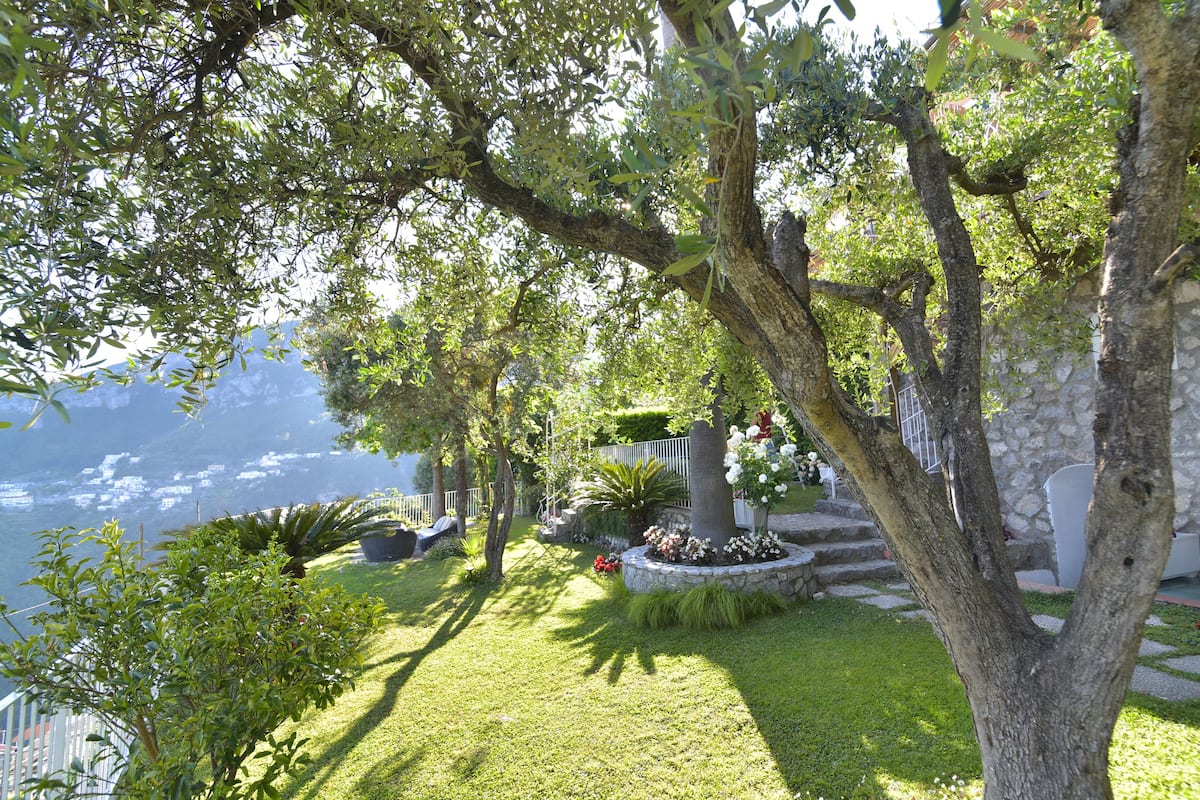
Right next door to our Villa, set in a commanding position on a promontory surrounded by terraces of olive and lemon trees sits the ruins of what was once one of the finest churches in the Republic of Amalfi in the Middles Ages.
This remarkable church was constructed in the 12th century during the peak of the powerful maritime Republic of Amalfi. While Pontone is a frazione, or hamlet, of Scala today, in the Middle Ages all of Scala was part of the Duchy of Amalfi. Pontone was home to the prominent D’Afflitto family who constructed this church and dedicated it to a saint important to them, Saint Eustace, an early Christian martyr in the 2nd century AD. When you step into what was once the nave of the church, it’s hard to imagine the original splendor of this church.
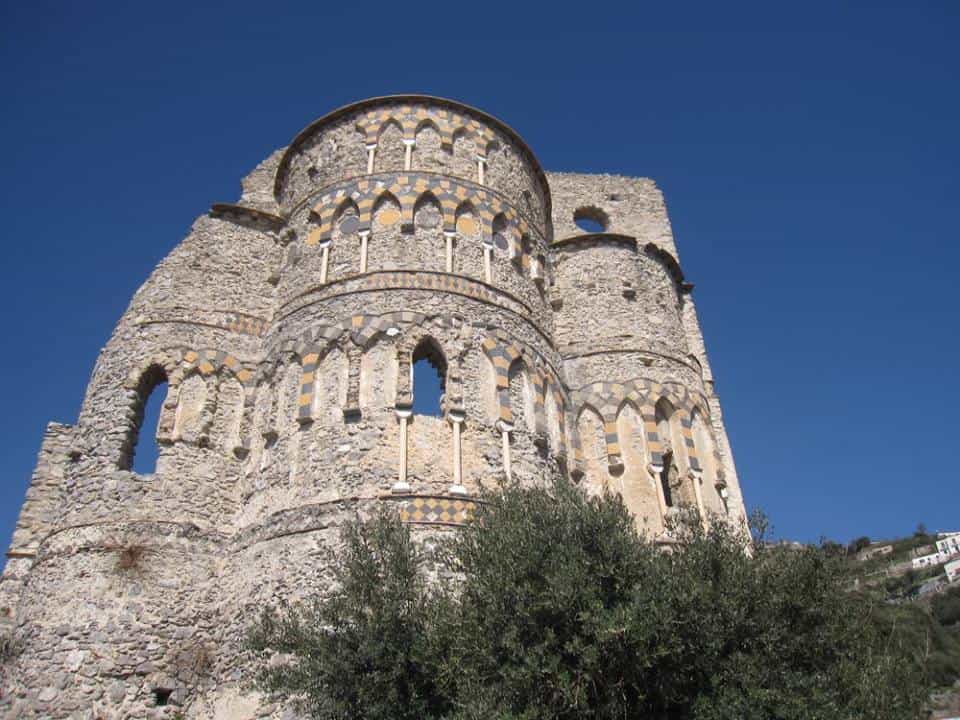
A pathway leads around the walls of the church where you can stand below the curves of the three apses. Here there are signs of the elaborate decoration, which has been restored in areas to reveal the original structural polychromy. Staring up at the traces of design and architectural details, it’s easier to see that at its height Sant’Eustachio must have been an absolute jewel.
Although in ruins, it is one of the truest examples of the unique architectural style that existed in Amalfi during the Middle Ages – a blend of styles with touches of Sicilian, Arab and Norman influences to name just a few. From this spot high above Amalfi it seems a stretch to imagine traders hundreds and hundreds of years ago crisscrossing the Mediterranean. Yet they did and returned home to build beautiful churches and grand homes high above Amalfi.
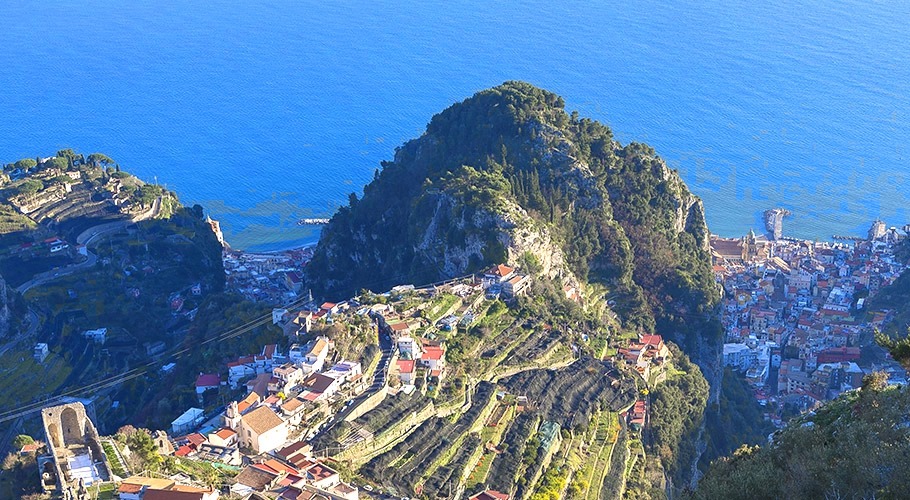
The setting for one of the finest churches on the Amalfi Coast was naturally chosen for its incredible view. The small promontory juts out between the Dragone and Canneto valleys that run down to Amalfi and Atrani. Peeking through the trees you can catch a glimpse of Amalfi down by the sea.
From the tip of the promontory below the ruins the view is breathtaking. Directly below is Pontone, while down the valley to the right is Amalfi and down the valley to the left is Atrani. Look left and you see Ravello sitting high atop its own promontory while to the right is Pogerola, a frazione of Amalfi.